Independent Canadian guide

Park with intention, not impulse

Precision Parkway is an independent English-language informational review website for Canadian visitors exploring Advance Parking Car Sim Game, an Android parking and driving simulator by Creative Gamers Studio. This guide interprets its parking-focused experience in practical terms: how to observe a space, establish a useful approach, and make deliberate decisions when vehicle placement matters. It is not an official game page, developer instruction, or Google resource.

Use these principles as a calm general approach to precision parking challenges. Enter with room, align before committing, move deliberately, and use small corrections when the vehicle is not sitting where you intended. The aim is patient positioning and understandable vehicle control, not a claim about any particular level, map, car, or control layout.

The Google Play link opens the supplied external listing for official availability details or installation.

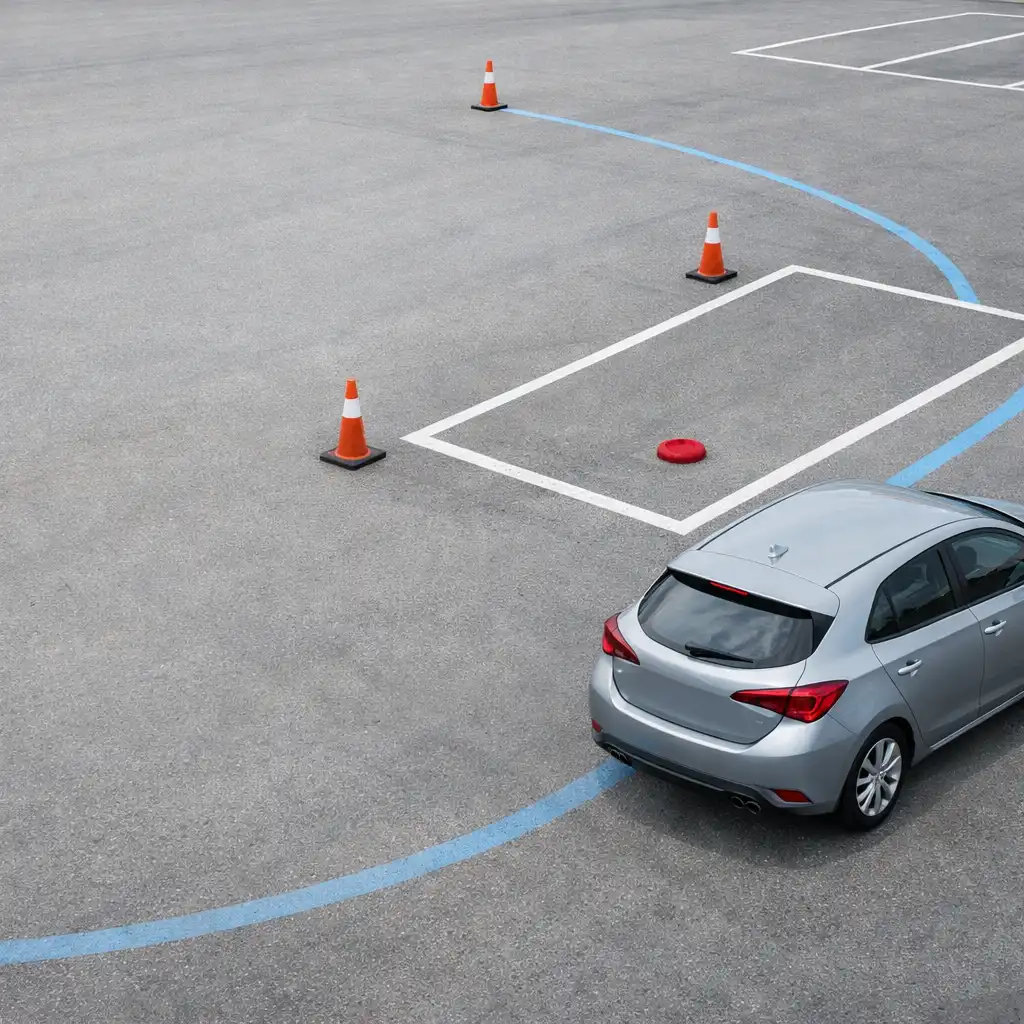
An unbranded compact car approaching a marked parking bay in a bright practice area
Illustrative parking-practice scene; not a verified game level or interface.

Course foundation

What precision parking asks of you

Precision is less about rushing toward an empty space than noticing where the vehicle is, where it needs to go, and how much room remains for a controlled change.

Observe

Read the space before the movement

Parking begins with a brief visual pause. Look at the available bay, its visible boundaries, and the direction in which you want the vehicle to sit. Treat the approach angle and surrounding edges as reference points, not obstacles to rush toward. Taking in that relationship before steering makes the next movement easier to explain and usually reduces abrupt, reactive corrections.
Setup

Create an approach that leaves room

A vehicle needs usable turning room before it enters a bay, especially when its body must rotate into a tighter final position. Avoid hugging a boundary too early. Instead, give yourself a little space to steer and think of the approach as preparation. A clean setup is easier to manage than a late turn made to force an already cramped line.

Target

Finish with deliberate alignment

The final stage is not simply crossing into a space. Assess whether the vehicle looks settled, centred, and controlled relative to visible parking lines or the open space around it. If the placement feels uneven, choose a small intentional adjustment rather than panic steering. That final visual check makes alignment a repeatable habit rather than a guess about a pass or fail rule.

Manoeuvre map

A repeatable parking sequence

Use this map as a general thinking tool, not an official layout or required game route. It gives each movement a purpose before the vehicle gets close to the intended bay.

Abstract parking manoeuvre map A vehicle follows a blue route from an entry line, curves into a white outlined bay, and ends at a red target zone. 1 2 3 4 ENTRY LINE FINAL BAY
01

Set the entry line

Begin from a position that keeps the intended space visible and leaves room for the first steering decision. “Entry line” is a guide concept, not a game mechanic: look for a clean path into the bay and favour a manageable approach over maximum speed. A useful starting line makes the later turn easier to observe.

02

Turn only when the vehicle has room

A turn made too early can carry the vehicle toward a boundary; one made too late can leave it wide for final alignment. Notice the front position in broad relation to the space, then use measured steering rather than sudden full-input changes. The goal is an observable path you can still adjust.

03

Straighten through the final approach

As the vehicle begins travelling toward the centre of the intended space, reduce steering so the last movement remains predictable. Use visible bay lines or open space as references. Small corrections are easier before the vehicle is deeply committed, whether you are considering forward or reverse positioning.

04

Pause, assess, correct

An imperfect line is not automatically a lost attempt. Pause visually, decide whether the vehicle is narrow, wide, early, or late, and make one controlled adjustment. One purposeful correction is clearer than repeated alternating inputs. See recover from common positioning errors for a calm diagnostic routine.

Positioning

Positioning before you commit

Use visible reference points to judge whether an approach is centred, narrow, or wide. Parking lines, nearby edges, and the vehicle’s apparent angle can all help, but choose a small number of references instead of trying to watch everything at once. Compare the vehicle’s direction with the intended space, then react to what that relationship suggests in the moment.

Reference, then react. A clear observation gives a correction a reason.

Protect the turning space

Do not use up available turning room before the vehicle reaches a point where the manoeuvre can be made cleanly. Approaching too close to a boundary can make every later choice feel sharper. If the setup looks increasingly cramped, mentally reset the approach rather than forcing a correction that is harder to read.

Choose smaller corrections

Modest adjustments reveal what changed. Repeated large changes can make the vehicle’s path harder to understand and blur the difference between correcting direction and simply adding movement. After each adjustment, check the result before making another decision. This habit builds careful, repeatable vehicle control.

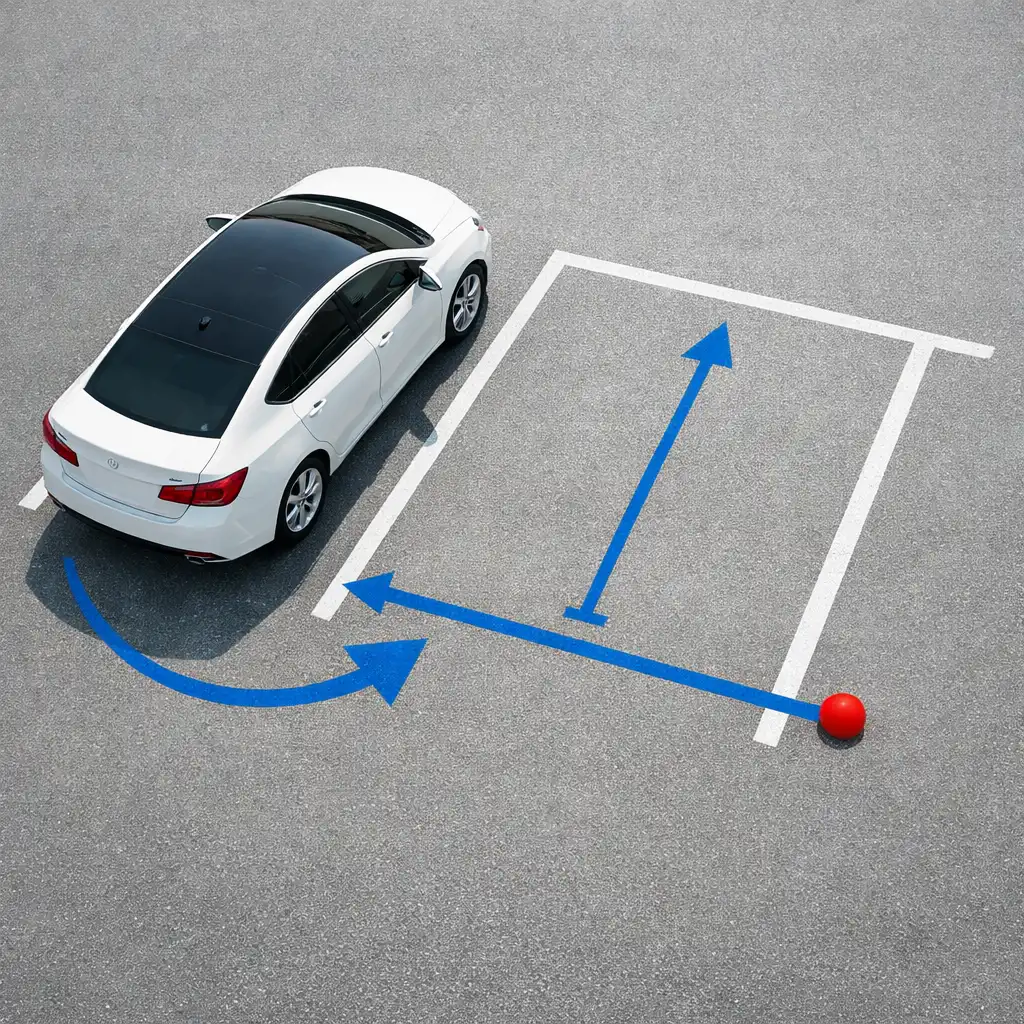
High three-quarter overhead view of an unbranded car beside marked parking bay lines
Illustrative parking-bay view showing angle and clearance; not a verified in-game screenshot.

Vehicle control

Make each input readable

Careful parking practice becomes easier to evaluate when each decision has a distinct purpose instead of arriving as a rushed reaction to the last movement.

Direction

Separate steering from speed decisions

Think first about where the vehicle should point, then about how much movement is needed. Deliberate sequencing reduces the pressure to react to every visual change at once and makes the effect of each choice easier to evaluate. This is platform-agnostic guidance, not a description of any particular control system.

Pace

Use a measured pace

A slow, controlled approach gives you more time to observe and correct in a parking challenge. Haste can make the vehicle’s next position harder to anticipate, while an intentional pace leaves space for a visual check. Treat speed as a precision-driving practice choice, not a promise about timing or scoring.

Assess

Let the vehicle settle before the next decision

After a turn or correction, reassess the path before adding another large change. Observation after movement helps you notice what actually shifted and builds a repeatable feel for positioning. For beginners, that pause is often more useful than trying to correct several things at the same time.

Parking challenges

Read the problem, not just the space

When a parking challenge feels difficult, identify the decision pressure behind it. The same broad habits—space, angle, reference points, and reflection—can guide many situations without assuming a fixed catalogue of levels or modes.

Situation 01

Limited space changes the setup

A narrower-looking space calls for more care before entry because late steering or poor alignment leaves less visible room for correction. Plan the approach before moving into the bay and return to the earlier turning-space principle. This is about perceived tightness, not a claim about a specific bay size or boundary.

Situation 02

An awkward angle needs an earlier decision

When a space appears not to line up neatly with the approach, prioritize orientation before trying to force final placement. Assess the angle instead of repeating the same turn. The manoeuvre map offers a useful general sequence: establish room, turn with purpose, then straighten toward the intended space.

Situation 03

Reverse movement calls for clearer references

When a manoeuvre involves backing into position, visual references and gentle corrections can be especially useful because the rearward path may be harder to judge. This does not mean reversing is always required. For a broader discussion of orientation, see the Camera Views and Vehicle Control guide.

Situation 04

A missed line is information

An imperfect approach can be useful feedback. Ask whether the vehicle entered too early, too late, too close, or too wide, then adjust the setup on a later attempt. Reflection is more productive than frustration because it turns a visible result into one specific idea to test, without assuming anything about retries or progression.

Workshop check

Recover from common positioning errors

Use a calm troubleshooting routine when a line looks wrong. The purpose is not to promise a fix, but to make one next decision clearer.

Too close to one boundary

Observe

When the vehicle appears crowded against one side, first consider whether the approach angle or steering timing created the imbalance. Look at the remaining room and the direction of travel instead of reacting only to the nearest boundary.

Try next

Avoid a rushed counter-turn. Identify one relationship that looks uneven, then choose a measured adjustment that addresses that position rather than several problems at once.

Too wide of the intended line

Observe

A vehicle drifting wide may be showing that its path needed earlier recognition, not a last-second large steering change. Return attention to the entry line and the vehicle’s orientation.

Try next

Use a smaller correction and observe its result. That keeps the change readable and helps distinguish a useful directional adjustment from extra movement.

Turn started too early

Observe

An early turn can consume room before the vehicle reaches a useful entry point, making the finish feel cramped or angled. Notice the pattern rather than forcing the same line repeatedly.

Try next

Reconnect with the principle of turning only when there is room. On a later attempt, focus on protecting the approach space before deciding to steer.

Turn started too late

Observe

A late turn can leave the vehicle travelling past the intended line and create a wider or misaligned final path. Watch the front position in relation to the space where a useful reference is visible.

Try next

Respond with measured movement rather than an abrupt change. The lesson is to recognize the developing line earlier, not to rely on a fixed cue that may not appear in every view.

Final bay check

Before you call the manoeuvre finished

01

Position

Does the vehicle appear to sit within the intended space, with a visually balanced amount of room around it? Look at the whole vehicle-to-bay relationship, not one edge alone.

02

Direction

Does the vehicle’s orientation look consistent with the space rather than simply crossing into it? A calm final visual check connects directly to the earlier alignment guidance.

03

Control

Was the final position reached through an understandable sequence of movements? Reflection helps carry a useful lesson into the next challenge and supports constructive practice.

Precision develops from seeing the space, protecting room, and responding with measured vehicle control instead of rushing the finish. This parking game review guide is one practical starting point; for a simpler next-read route, visit our Beginner Tips for Advance Parking Car Sim Game .

Editorial note

Where this guide fits in the review

Precision Parkway is an independent informational review website. This guide is not official instruction from Creative Gamers Studio, Advance Parking Car Sim Game, or Google. We use the supplied Google Play listing as the destination for official listing details, while this page offers general editorial guidance about parking mindset, position, manoeuvring, camera awareness, and vehicle control.

Next step

Ready to explore the listing?

For official availability details or installation of Advance Parking Car Sim Game by Creative Gamers Studio, use the supplied Google Play listing. Precision Parkway remains an independent review resource: this guide is here to support careful parking practice, while Google Play is the external destination for listing information.

View on Google Play

Opens the supplied Google Play destination in a new tab.