Course 01 · Start with control

Beginner Tips for Advance Parking Car Sim Game

This beginner course is a calm companion for Canadian players exploring Advance Parking Car Sim Game, the Android parking and driving simulator from Creative Gamers Studio. The aim is not speed. It is learning to judge position, steer with intent, check the rear path, and leave enough time to make a useful correction.

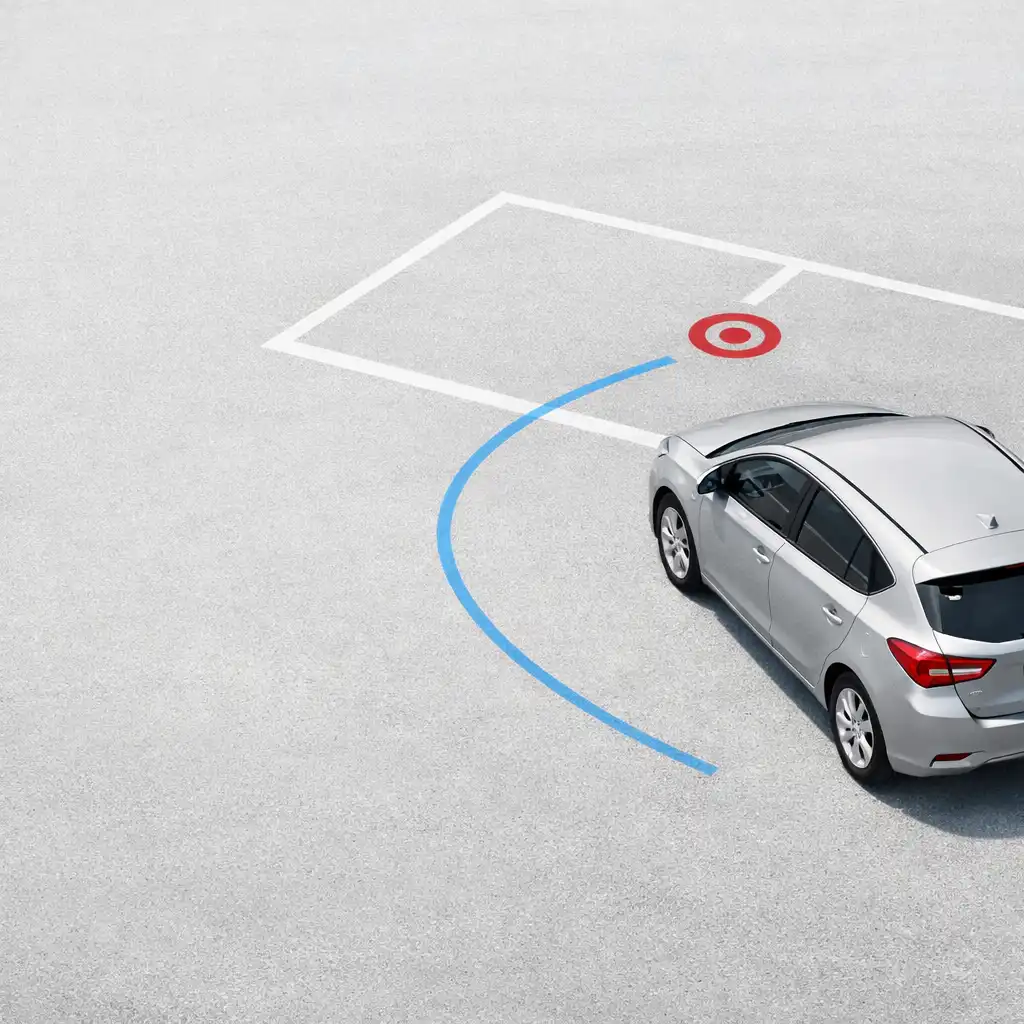
Car approaching a marked parking bay with visible bay lines and a target position.
Editorial parking-positioning illustration; available game settings and challenges may vary.

Zone 02 · Read the bay

Before the wheels move

Give yourself a short observation routine before every attempt. Parking lines are useful references, not background decoration: they help you see the entrance, the available turning room, and the final position you want to reach.

  1. 01

    Read the target space first

    Find the intended bay, its entrance direction, and the clearance that appears usable before moving. Notice which side of the space will need the wider turn-in, then treat the visible lines as boundaries you can return to throughout the attempt. Not every challenge will look identical, so begin by reading the space in front of you rather than assuming one pattern fits every parking situation.

  2. 02

    Choose a reference point

    Pick one stable visual cue: a near bay line, a corner, or the vehicle’s relationship to an edge. Keep using that same reference as the attempt develops. Switching focus from one detail to another too quickly can make small corrections feel unpredictable. A consistent point gives you a simple question to answer: is the vehicle moving closer to, or farther from, the intended alignment?

  3. 03

    Make room for the turn

    In a parking simulator, a wider and calmer setup is often easier to judge than a rushed tight entry. Avoid hugging the target space too early, because that can remove the lateral room needed for a smooth arc. Give the vehicle a controlled approach lane where possible, whether you expect to enter forward or are setting up to reverse. The extra room makes the first steering decision easier to read.

  4. 04

    Decide where the attempt ends

    Before starting, picture a final position that is reasonably straight and centred within the visible boundaries. Entering a space is not quite the same as finishing well inside it. Knowing where you want to stop helps you reserve the final movement for alignment. A brief pause before that last stop can prevent an overrun and gives you time to check both sides of the vehicle.

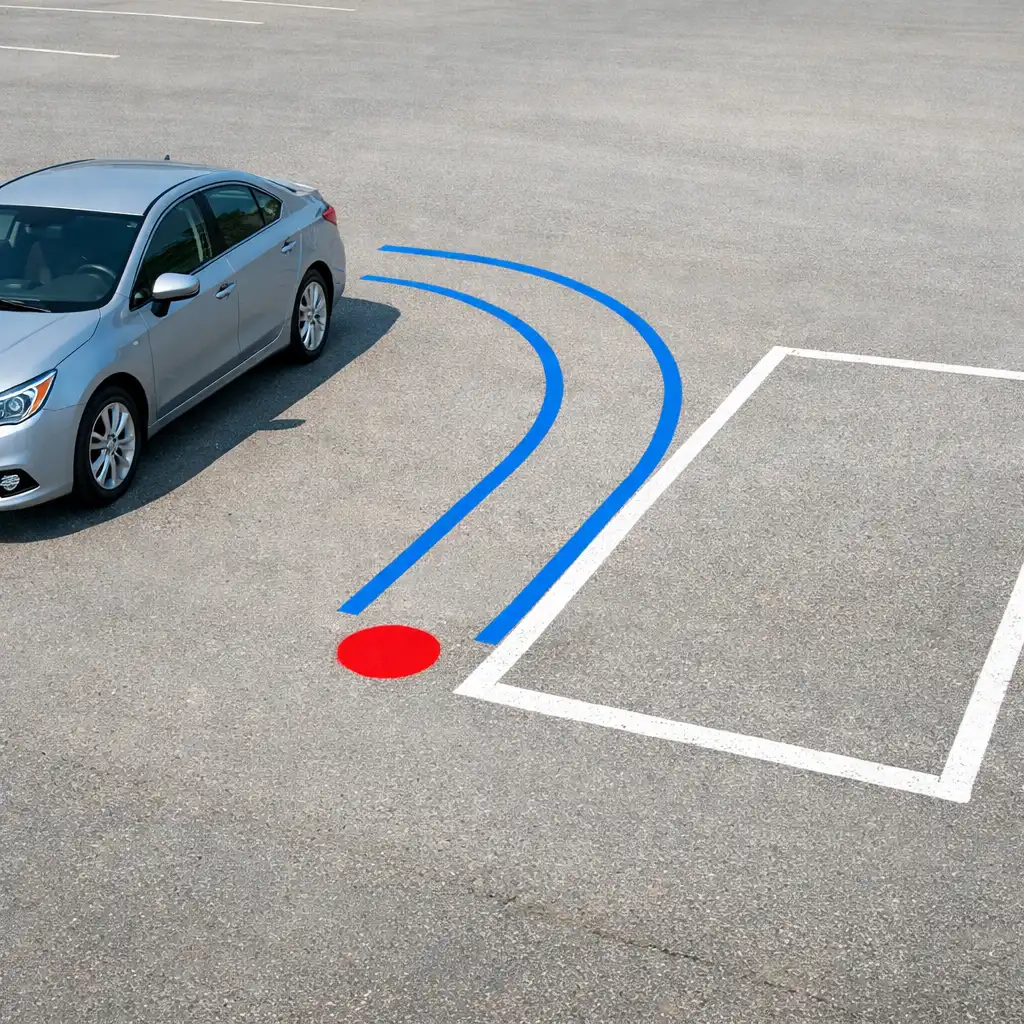
Car aligned beside a marked parking space with clear room to turn.
Editorial positioning illustration showing a parallel approach and visible correction space.

Positioning · arrive square

Positioning: arrive square, not rushed

Approach roughly parallel to the lane or relevant edge whenever the visible space allows it. Parallel is a visual relationship, not a precise measurement: you are looking for a calmer baseline before the first turn. If the vehicle is already drifting toward the bay at an awkward angle, correct early while there is still open pavement. That early adjustment is often simpler than trying to save the approach at the entrance.

Leave a correction lane around the vehicle rather than cutting sharply toward the target. Visible room lets you adjust direction before committing to the space, and it matters whether you are entering forward or preparing a reverse approach. A deliberate setup can feel slower for a moment, but it gives each next movement a clearer purpose and makes a sudden late correction less tempting.

Zone 03 · Plan the arc

Steering: one clean input at a time

Steering becomes easier to understand when every movement has room to show its result. In a car driving simulator, a planned arc is usually more readable than a sharp correction made after the vehicle has already run out of space.

Turn when the vehicle has room to arc

Set up before turning so there is enough path ahead or behind for a smooth curve. A planned arc starts with a useful position and a clear turn-in point. That differs from forcing a late angle with a sudden sharp movement, which can make the available bay feel smaller than it is.
Use smaller corrections than instinct suggests

Make a brief, deliberate steering change, then wait long enough to see the direction it creates. Continuous input can hide the cause of a poor angle because several changes arrive before you can judge the first one. Near bay lines, small readable corrections are easier to repeat and easier to reverse.

Straighten before the final position

A vehicle can enter a space yet still finish at an angle if steering is not unwound in time. Watch the relationship to both bay sides, not just the closest line. Reserve the final movement for alignment, so it is a small straightening action rather than a large directional rescue.

Reverse practice · see the route

Reversing: look behind, then move

Reverse movement can feel visually counterintuitive at first. A pause before moving gives you time to establish where the rear of the vehicle needs to travel and which visible line or corner will help you judge that path.

01

Pause to establish the rear path

Stop before reversing and identify where the rear needs to travel relative to the bay or lane. When visible, rear corners and nearby lines can become useful references. The image may change quickly as the vehicle moves, so begin with one simple path in mind instead of trying to interpret every detail at once.

02

Reverse in short, readable movements

Use modest movements so you can see whether the rear is approaching the intended line. Pause between adjustments and let the vehicle’s new relationship to the bay become clear. Slow observation is more useful than attempting to correct everything at once, especially when careful movement is the skill you are practising.

03

Correct the path, not just the picture

A changing view can be misleading if you only react to what fills the screen. Ask whether the vehicle’s path is bringing it closer to a centred final position, then check both side relationships before stopping. If the reverse angle becomes difficult to recover, a forward reset may provide a clearer approach.

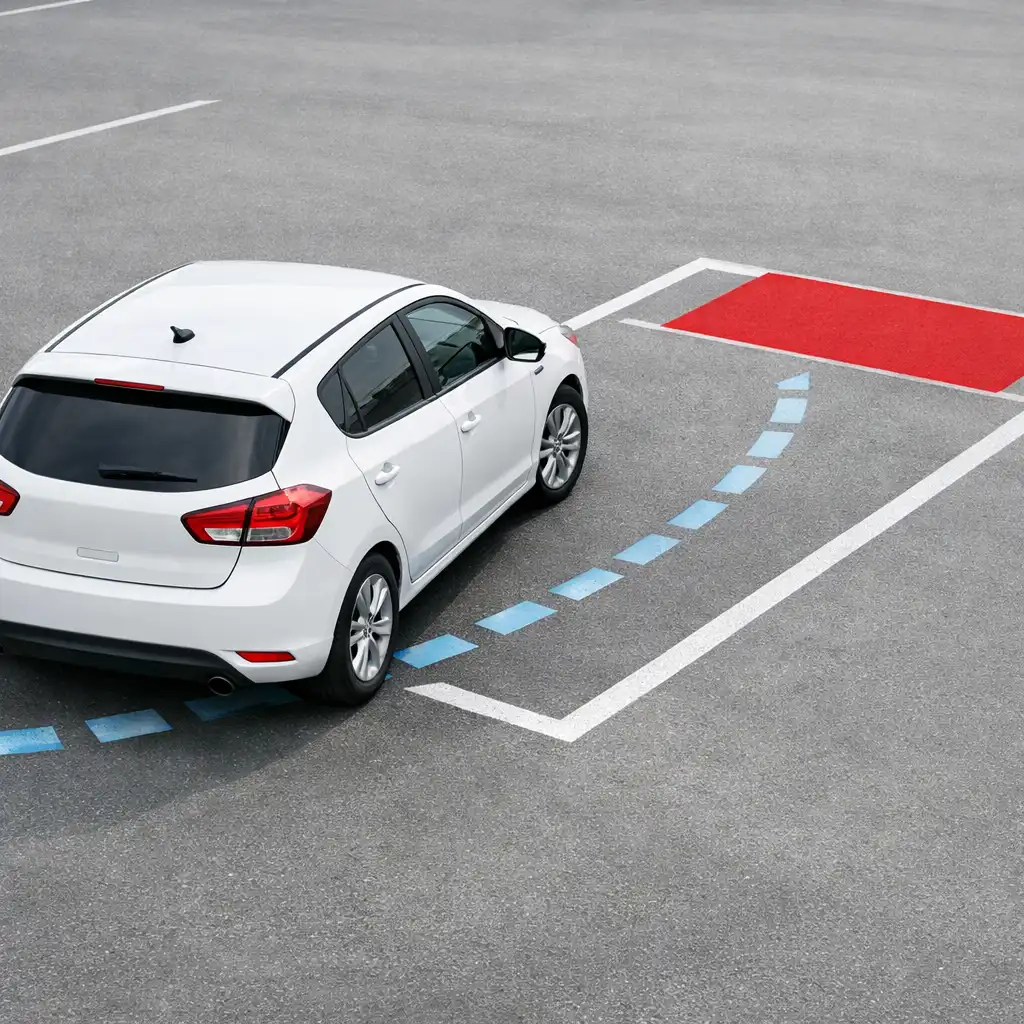
Car reversing toward a marked bay with a visible rear path.
Editorial reverse-practice illustration; it does not represent a confirmed in-game camera layout.

Course rhythm · 04 steps

The careful-movement rhythm

Use this short decision sequence whenever an attempt begins to feel busy: observe, move, check, then correct.

  1. 01

    Observe

    Check the target, surrounding boundaries, and current vehicle angle before input. Return to the reference point you selected during setup.

  2. 02

    Move

    Make one calm movement with a purpose: improve the approach, begin the arc, or settle into the final line. Avoid motion that does not answer a need.

  3. 03

    Check

    Pause long enough to judge what changed. The pause shows whether the next correction can stay small or whether a clearer reset is needed.

  4. 04

    Correct

    Use the smallest useful change, or rebuild the approach when the route is no longer clear. For beginners, control is more valuable than speed.

Correction clinic

When an attempt starts to unravel

Small errors are useful information. The goal is not to judge an attempt harshly, but to identify the next observation that can make the route simpler.

The turn began too early

An early turn can close off the space needed for a smooth path. Instead of forcing the angle, pause and check the original approach reference again. If there is room, rebuild a calmer setup that leaves more turn space; if not, use the attempt to notice when the vehicle started committing too soon.

The vehicle is entering at an angle

Being inside the bay does not always mean the vehicle is ready to finish. Watch both bay sides and make a calm straightening movement before the final position is judged. Keep that adjustment separate from a major last-second turn: the final alignment should be small enough that you can clearly see its effect.

The reverse path no longer looks clear

When the rear path becomes uncertain, do not continue on momentum. Pause and return to the clearest available reference point. A cleaner approach may teach more than repeated corrections made from a confused angle, because it lets you see which earlier decision changed the path.

Build confidence one clean attempt at a time. This independent parking game review guidance is designed to help you notice one improvement per try, not rush through a parking challenge. Continue with the deeper Precision Parking Guide →.

Zone 05 · Repeat with purpose

A short beginner practice route

Try these passes at your own pace on any available challenge that feels comfortable. This is not an official course or fixed level order; it is a way to practise one decision at a time.

01

Pass one: learn the space

Use an early or comfortable attempt to focus only on recognising the bay, choosing a reference point, and leaving room for the turn. Do not worry about perfection during this pass. The purpose is to make the space familiar enough that your next movement does not feel like a guess.

02

Pass two: practise the steering rhythm

On the next pass, apply one clean steering input, observe what changed, and straighten before the final position. Connect every movement to the observe–move–check–correct rhythm. Slower, more readable movement makes it easier to tell whether your setup or your steering needs attention.

03

Pass three: add reversing and recovery

Add a rear-path check when the situation calls for it, then practise calmly resetting a poor angle rather than multiplying corrections. The useful skill is recognising the difference between a path that is still recoverable and one that needs a cleaner setup. Available challenges may differ, so adapt the route to what you can see.

Quick reference

Quick-reference parking checklist

  • 01

    Set up before turning

    Identify the target, approach angle, and room needed for the arc before moving.

  • 02

    Use one reference point

    Pick a visible edge, line, or corner and use it consistently through the manoeuvre.

  • 03

    Make a small input, then observe

    Avoid stacking fast steering changes before you have seen the result of the first one.

  • 04

    Pause before reversing

    Identify the rear path and the next reference point before movement begins.

  • 05

    Straighten for the finish

    Use the final movement to align, not to make a large last-second rescue turn.

  • 06

    Reset when the route is unclear

    A cleaner setup can teach more than repeated rushed corrections.

Course complete · keep it calm

A calm start makes precision easier

Positioning, deliberate steering, reverse checks, and small corrections give beginners a practical base before they try more demanding parking attempts. This is independent editorial guidance for Advance Parking Car Sim Game by Creative Gamers Studio; confirm current game information and installation details through the supplied Google Play listing.

View on Google Play (opens in a new tab)